
The current run of failures in leadership and difficulties applying our disciplinary processes won’t be the death of the Anglican Church in North America (ACNA). Far from it.
I make that prediction as one of a small group of people who witnessed the formation of the ACNA up close. The truth is, we have survived many near-death experiences over the years, even though most never made it into The Washington Post. We will survive this one as well. There is even something hopeful in the fact that we are a church that has a process for investigating and, if necessary, disciplining our own primary leader.
Still, there is both a warning and an opportunity for us in this moment of public accounting.
A Warning and an Opportunity
The warning is this: we need to think hard and honestly about how we got here. We need to recognize that part of the problem is us and the story we like to believe about ourselves.
That story goes something like this: a heroic group of men and women stood for the Gospel, the ethical teachings of Jesus Christ, and the discipline of the Church, even the unpopular bits. Because they did that, God blessed them and the organizations they led. Many lost their property and possessions, but our churches grew and flourished anyway. We got the people; the other guys got the empty buildings. Despite fierce opposition, something new and good was born, something on the leading edge of God’s work of saving souls and purifying His Church in our time.
This story is powerful and mostly, but not entirely, true. To begin with, there were both heroes and villains at work in the formation of the ACNA and still at work in it today. Churches will always attract both. This is why repeatedly vetting leaders and practicing safeguarding at every level and at every decision point is so important.
It also needs to be said: sometimes, growing churches and dioceses are not signs of God’s blessing and approval but rather time bombs built on ambition, personality, and manipulation.
Who We Are Not
The bottom line is that we are not the Church Triumphant. We are not the church that won its biggest battle when we walked away from our stuff and now only needs to follow saints and heroes on the wide road to heaven, confident that we are the good guys. We are still the Church Militant, still fighting the war and that battle rages both inside and outside. The line between good and evil runs right through the middle of every human heart, to paraphrase Aleksandr Solzhenitsyn (who compared to Jeremiah chapter 17, verse 9 was a bit of an optimist!).
It always does—even for us.
We are a church crying out for humble leaders with the character of Christ.
And here is the opportunity: we could set aside our claims to be things we are not. We could begin to get better—starting with the College of Bishops and extending all the way down to congregational search and discernment committees—at choosing leaders who are humble and careful, both in what they say about our church and in what they believe about themselves.
We are a church crying out for humble leaders with the character of Christ. That is more important than any congregational statistic or structure someone has built.
Choosing Who Will Lead Us
The good news is that there are many such leaders within the ACNA. There are thousands of humble and faithful clergy and laity already working sacrificially for the good of the Gospel. Our present weakness does not define who we are and it need not define our future.
But we are going to have to choose it.
That will not be easy. Sometimes it must mean prioritizing quiet faithfulness in small things over a big hero-story of great accomplishments for God. One of these moments should be when we elect a bishop or archbishop.
In all our ordination and election processes, it will mean digging deeper and asking uncomfortable questions rather than simply saying yes to the people we want to say yes to because they can draw others to them.
I serve as the chair of the Examining Chaplains in my diocese. I do not underestimate how difficult it will be to prioritize anything more than charisma, talent and a track record of success. We want and need those things so badly. But it is always worth asking ourselves why we want them. Sometimes I think it is because we have conflated our organizational growth with proof that we are the good guys in God’s sight.
We need to rethink that. We need to slow down and value Christlike character most of all before we make any call to leadership.
Doing so is worth it. The Church will be better served. It will have servant leaders who look more like their Master.
“Let each of you look not only to his own interests, but also to the interests of others. Have this mind among yourselves, which is yours in Christ Jesus, who, though he was in the form of God, did not count equality with God a thing to be grasped, but emptied himself, by taking the form of a servant.” — Philippians 2:4–7
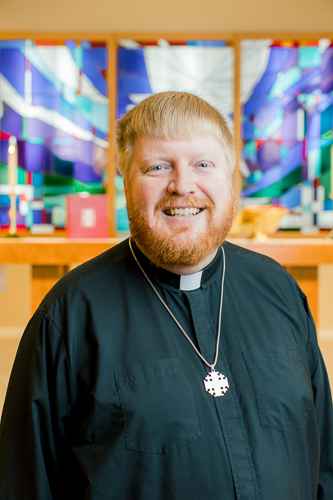
About the Author: The Rev. Peter Frank is the Rector of Church of the Epiphany in Chantilly, VA. He served as Director of Communications for the Diocese of Pittsburgh, the Anglican Communion Network, the Anglican Church in North America, and Trinity School for Ministry (interim) between 2004 and 2010. Peter was the North American Media Lead for GAFCON 2008 and a member of the ACNA’s dialogue with the Lutheran Church–Missouri Synod and the Lutheran Church–Canada from 2014–2025. He is currently chair of the Examining Chaplains of the Diocese of the Mid-Atlantic.